


By Dr. Gregory C. Fors, Functional Medicine Specialist & Chief Science Officer, BioSpec...
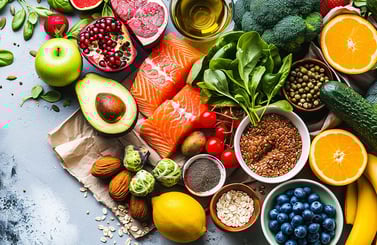
Why This Matters
Nutrition advice is often presented as if there is one “best” diet for everyone. In reality, a more useful question is:
Which dietary pattern has the strongest evidence for a specific health goal and long-term sustainability?
Across high-quality human research, Mediterranean and DASH dietary patterns generally have the strongest evidence for broad cardiometabolic benefit, while other patterns (such as vegan or ketogenic diets) may be helpful in more specific scenarios but often require more careful planning, monitoring, or long-term adherence support.[1-5]
Important note: The sample 2,000-calorie days below are illustrative examples using common foods associated with each diet pattern. They are not individualized meal plans.
Mediterranean Diet
The Mediterranean diet is a plant-forward dietary pattern that emphasizes:
- Vegetables and fruit
- Legumes (beans, lentils, chickpeas)
- Whole grains
- Nuts and seeds
- Extra-virgin olive oil
- Fish/seafood (regularly)
- Limited processed foods, processed meats, and added sugars[2,6]
Common Foods
Olive oil, salmon/sardines, lentil soup, hummus, Greek yogurt, tomatoes, leafy greens, whole-grain breads, walnuts, berries.
Origins
The Mediterranean diet was popularized from observational and later intervention research on traditional eating patterns in Mediterranean regions, especially Southern Europe.[2,6]
Evidence
This is one of the most evidence-supported dietary patterns for cardiovascular prevention and broader cardiometabolic health. In PREDIMED, a Mediterranean-style diet supplemented with extra-virgin olive oil or nuts reduced major cardiovascular events in high-risk adults compared with a reduced-fat control diet.[2]
Shortcomings / Challenges
- “Mediterranean” is not one fixed diet (definitions vary between studies).[1]
- Cost and time can be barriers (olive oil, fish, produce, meal prep).
- Benefits depend on food quality, not just the label “Mediterranean.”
Sample 2,000-Calorie Day
- Breakfast: Greek yogurt, berries, oats, walnuts
- Lunch: Chickpea salad with olive oil + lemon, whole-grain pita, fruit
- Snack: Apple + almonds
- Dinner: Salmon, roasted vegetables, quinoa/farro, side salad with olive oil
- Optional snack: Hummus + carrots/cucumbers
Best Fit (Evidence-Based)
- Broad heart and metabolic health
- Long-term sustainable “default” pattern for many adults[1,2,6]
DASH Diet (Dietary Approaches to Stop Hypertension)
DASH is a structured dietary pattern designed to help lower blood pressure, emphasizing:
- Fruits and vegetables
- Whole grains
- Low-fat dairy
- Beans/legumes
- Nuts/seeds
- Lean proteins
- Lower sodium intake[3,4,7]
Common Foods
Oatmeal, bananas, low-fat yogurt, grilled chicken, brown rice, broccoli, beans, unsalted nuts.
Origins
DASH was developed and tested in NIH/NHLBI-supported feeding studies to determine how dietary patterns affect blood pressure.[3,4,7]
Evidence
DASH has some of the strongest evidence for reducing blood pressure. The original DASH trial improved BP versus a typical U.S. diet, and DASH-Sodium showed greater BP reductions when sodium was reduced further.[3,4]
Shortcomings / Challenges
- Sodium reduction is difficult in a packaged-food and restaurant-heavy food environment.
- Some people find DASH less flexible or exciting than Mediterranean eating (though they overlap a lot).
Sample 2,000-Calorie Day
- Breakfast: Oatmeal with banana and low-fat milk; unsalted nuts
- Lunch: Turkey sandwich on whole-grain bread, side salad, fruit
- Snack: Low-fat yogurt + berries
- Dinner: Grilled chicken, brown rice, broccoli, mixed salad
- Optional snack: Carrots + hummus (lower-sodium option)
Best Fit (Evidence-Based)
- Hypertension / elevated blood pressure
- Cardiovascular prevention, especially when sodium is addressed[3,4]
Ornish Diet (and Ornish Lifestyle Program)
The Ornish approach is often described as a very low-fat vegetarian diet, but in clinical research it is best understood as a comprehensive lifestyle program that includes:
- Very low-fat vegetarian eating
- Exercise
- Stress management
- Smoking cessation (when relevant)
- Group/social support[9,10]
Common Foods
Beans, lentils, vegetables, fruits, whole grains; very limited added fats and limited high-fat animal foods.
Origins
Developed by Dean Ornish, MD, as an intensive lifestyle intervention for heart disease risk reduction and coronary disease management.[9,10]
Evidence
Trials reported regression of coronary atherosclerosis and fewer cardiac events in selected participants following the Ornish lifestyle program.[9,10]
Important Limitation
Because the intervention includes multiple simultaneous lifestyle changes, the benefits cannot be attributed to diet alone.[9,10]
Shortcomings / Challenges
- Intensive and restrictive for many people
- Adherence often requires strong support
- Best evidence supports the full program, not simply “low-fat vegetarian eating”
Sample 2,000-Calorie Day
- Breakfast: Oatmeal with berries and cinnamon; fruit
- Lunch: Lentil soup, large salad, whole-grain roll
- Snack: Fruit + air-popped popcorn
- Dinner: Bean and vegetable stir-fry over brown rice (minimal oil), side salad
- Optional snack: Nonfat yogurt or fruit (depending on version used)
Best Fit (Evidence-Based)
- Highly motivated individuals pursuing intensive lifestyle-based cardiovascular risk reduction with professional support[9,10]
Vegan Diet (Distinct from Ornish)
A vegan diet excludes all animal-derived foods. Unlike Ornish, a vegan diet is not necessarily low-fat and can range from whole-food plant-based to highly processed.[11,12]
Common Foods
Tofu, tempeh, beans, lentils, oats, quinoa, fruit, vegetables, nuts/seeds, fortified plant milks/yogurts, meat alternatives (quality varies).
Origins
Modern vegan diets arise from a mix of ethical, environmental, cultural, and health motivations and vary widely in quality and composition.
Evidence
Randomized trial evidence supports improved blood lipid markers (including LDL-C and apoB) with vegetarian/vegan diets.[11] A randomized identical-twins trial also found improvements in LDL-C, fasting insulin, and weight over 8 weeks with a healthy vegan pattern.[12]
Shortcomings / Challenges
- Lacks essential nutrients, primarily vitamin B12, and often calcium, iodine, vitamin D, iron, zinc, omega-3 intake, and protein quality.[13]
- Health outcomes depend heavily on food quality (whole foods vs ultra-processed vegan foods).
Sample 2,000-Calorie Day
- Breakfast: Oatmeal with fortified soy milk, chia seeds, berries, peanut butter
- Lunch: Quinoa bowl with black beans, roasted vegetables, avocado
- Snack: Apple + almonds
- Dinner: Tofu stir-fry with vegetables and brown rice
- Optional snack: Fortified plant yogurt + pumpkin seeds
Best Fit (Evidence-Based)
- LDL/apoB lowering
- Helpful for some people seeking weight/metabolic improvements when well-planned[11,12]
Ketogenic Diet
A ketogenic diet is a very low-carbohydrate, high-fat diet intended to induce nutritional ketosis, a metabolic state in which the body produces ketone bodies and relies more on fat-derived fuels because carbohydrate intake is low.[5,14,15]
Common Foods
Eggs, meat, fish, avocado, olives, cheese (in many versions), nuts/seeds, oils, butter, non-starchy vegetables (e.g., spinach, zucchini, cauliflower).
Origins
Ketogenic diets originated as medical nutrition therapy for epilepsy and are still used in that setting under supervision.[14,15]
Evidence
In selected adults (especially some with type 2 diabetes), low/very-low-carb approaches may improve short-term glycemic outcomes, weight, and triglycerides. However, many benefits attenuate over time, and long-term adherence and safety questions remain for broad use.[5]
Ketosis and the Warburg Effect (Important Clarification)
The Warburg effect refers to the tendency of many cancer cells to use high rates of glucose uptake and lactate production even when oxygen is available (aerobic glycolysis).[17] This has led to interest in ketogenic diets as a way to alter substrate availability. However, this is not proof that ketogenic diets treat cancer, and current human clinical evidence is limited and mixed. Keto should not be presented as a standard cancer treatment.[18,19]
Shortcomings / Challenges
- Adherence can be difficult long term
- Diet quality varies dramatically (whole-food keto vs processed/high-saturated-fat keto)
- LDL-C may increase in some individuals
- Long-term outcome evidence is weaker than Mediterranean/DASH for broad prevention[1,5,16]
Sample 2,000-Calorie Day
- Breakfast: Eggs, avocado, sautéed spinach in olive oil
- Lunch: Salmon salad with olive oil dressing, greens, walnuts
- Snack: Cheese + macadamia nuts (or olives)
- Dinner: Chicken thighs, roasted cauliflower and zucchini in olive oil
- Optional snack: Chia pudding with unsweetened almond milk (or full-fat plain yogurt if included)
Best Fit (Evidence-Based)
- Short-term glycemic management / weight loss support in selected adults, especially with clinical monitoring[5]
Paleo Diet
Paleo-style diets generally emphasize:
- Meat, fish, eggs
- Vegetables and fruits
- Nuts and seeds
Exclude:
- Grains
- Legumes
- Dairy (in stricter versions)[16,20]
Common Foods
Eggs, meat, fish, sweet potatoes, berries, nuts, leafy greens, olive oil.
Origins
Paleo was popularized as a “hunter-gatherer inspired” eating pattern, though modern versions vary and do not represent one standardized ancestral diet.[16]
Evidence
Evidence is mixed and generally less robust than Mediterranean or DASH. Some trials suggest improvements in select risk factors, but meta-analytic evidence does not show consistent superiority for glycemic outcomes vs other healthy diets.[20]
Shortcomings / Challenges
- Restrictive (especially eliminating grains/legumes/dairy)
- Can make calcium/fiber adequacy harder without planning
- Definitions vary substantially between studies and real-world versions[16,20]
Sample 2,000-Calorie Day
- Breakfast: Vegetable omelet + fruit
- Lunch: Grilled chicken salad with olive oil and nuts
- Snack: Apple + almond butter
- Dinner: Salmon or steak, roasted sweet potato, asparagus
- Optional snack: Mixed nuts
Best Fit (Evidence-Based)
- No major condition where Paleo clearly outperforms Mediterranean or DASH in current high-quality human evidence[1,16,20]
Carnivore Diet
A carnivore diet is an extreme elimination pattern centered on animal foods only (often meat, eggs, and sometimes dairy), excluding plant foods entirely.[16,21]
Common Foods
Beef, eggs, fish, poultry, butter/tallow, cheese (in many versions).
Origins
A modern internet-popularized pattern rather than a standardized therapeutic diet with a robust evidence base.
Evidence
At present, there is no strong body of randomized human clinical trial evidence showing long-term safety or superiority for common health outcomes. The most cited human data are self-reported survey results, which are hypothesis-generating but not definitive.[21]
Shortcomings / Challenges
- Major long-term evidence gaps
- Potential nutrient adequacy concerns depending on implementation
- No established advantage over better-studied patterns for chronic disease prevention[16,21]
Sample 2,000-Calorie Day
- Breakfast: Eggs + steak (or bacon/eggs)
- Lunch: Ground beef patties + eggs
- Snack: Jerky / hard-boiled eggs
- Dinner: Ribeye or salmon with butter (if used)
- Note: Plant foods and fiber are excluded by design
Best Fit (Evidence-Based)
- No established indication based on current high-quality human evidence[21]
Which Diet May Be Most Beneficial for Common Health Goals?
- Hypertension / elevated blood pressure: DASH (especially with sodium reduction)[3,4]
- Broad cardiometabolic and cardiovascular prevention: Mediterranean diet[1,2,6]
- LDL/apoB lowering (when well-planned): Vegan / plant-based patterns[11,12]
- Short-term glycemic improvement / weight loss in selected adults with T2D: Ketogenic / low-carb approaches (with monitoring)[5]
- Intensive lifestyle-based coronary risk reduction in highly motivated patients: Ornish program (program, not diet alone)[9,10]
Bottom Line
For most adults, Mediterranean and DASH dietary patterns remain the strongest evidence-supported “default” options because they combine:
- strong human research support,
- nutrient density,
- and practical long-term sustainability.[1-4,16]
Restrictive diets may still be useful in selected contexts—but they usually require more individualized planning and careful monitoring.[5,16,20,21]
Biospec Nutritionals — Medical & Educational Disclaimer
This content is provided for educational and informational purposes only and is not intended to provide medical advice, diagnosis, or treatment. It is not a substitute for individualized guidance from a qualified healthcare professional. Always consult your physician or other qualified healthcare provider regarding any medical condition, and before starting, stopping, or changing any medication, supplement, diet, or exercise program.
† FDA Disclaimer: These statements have not been evaluated by the Food and Drug Administration. This product is not intended to diagnose, treat, cure, or prevent any disease.
References
- Dinu M, Pagliai G, Angelino D, et al. Effects of popular diets on anthropometric and cardiometabolic parameters: an umbrella review of meta-analyses of randomized controlled trials. Adv Nutr. 2020;11(4):815-833. doi:10.1093/advances/nmaa006
- Estruch R, Ros E, Salas-Salvadó J, et al. Primary prevention of cardiovascular disease with a Mediterranean diet supplemented with extra-virgin olive oil or nuts. N Engl J Med. 2018;378(25):e34. doi:10.1056/NEJMoa1800389
- Appel LJ, Moore TJ, Obarzanek E, et al; DASH Collaborative Research Group. A clinical trial of the effects of dietary patterns on blood pressure. N Engl J Med. 1997;336(16):1117-1124. doi:10.1056/NEJM199704173361601
- Sacks FM, Svetkey LP, Vollmer WM, et al; DASH-Sodium Collaborative Research Group. Effects on blood pressure of reduced dietary sodium and the Dietary Approaches to Stop Hypertension (DASH) diet. N Engl J Med. 2001;344(1):3-10. doi:10.1056/NEJM200101043440101
- Goldenberg JZ, Day A, Brinkworth GD, et al. Efficacy and safety of low and very low carbohydrate diets for type 2 diabetes remission: systematic review and meta-analysis of published and unpublished randomized trial data. BMJ. 2021;372:m4743. doi:10.1136/bmj.m4743
- Guasch-Ferré M, Willett WC. The Mediterranean diet and health: a comprehensive overview. J Intern Med. 2021;290(3):549-566. doi:10.1111/joim.13333
- National Heart, Lung, and Blood Institute. DASH Eating Plan. Updated January 2025. (consumer guidance resource; linked above)
- Sacks FM, Obarzanek E, Windhauser MM, et al. Rationale and design of the Dietary Approaches to Stop Hypertension trial (DASH): a multicenter controlled-feeding study of dietary patterns to lower blood pressure. Ann Epidemiol. 1995;5(2):108-118. doi:10.1016/1047-2797(94)00055-p
- Ornish D, Brown SE, Scherwitz LW, et al. Can lifestyle changes reverse coronary heart disease? The Lifestyle Heart Trial. Lancet. 1990;336(8708):129-133. doi:10.1016/0140-6736(90)91656-U
- Ornish D, Scherwitz LW, Billings JH, et al. Intensive lifestyle changes for reversal of coronary heart disease. JAMA. 1998;280(23):2001-2007. doi:10.1001/jama.280.23.2001
- Koch CA, Kjeldsen EW, Frikke-Schmidt R. Vegetarian or vegan diets and blood lipids: a meta-analysis of randomized trials. Eur Heart J. 2023;44(28):2609-2622. doi:10.1093/eurheartj/ehad211
- Landry MJ, Ward ZJ, Cunanan KM, et al. Cardiometabolic effects of omnivorous vs vegan diets in identical twins: a randomized clinical trial. JAMA Netw Open. 2023;6(11):e2344457. doi:10.1001/jamanetworkopen.2023.44457
- Tong TYN, Appleby PN, Armstrong MEG, et al. Vegetarian and vegan diets and risks of total and site-specific fractures: results from the prospective EPIC-Oxford study. BMC Med. 2020;18(1):353. doi:10.1186/s12916-020-01815-3
- Masood W, Annamaraju P, Uppaluri KR. Ketogenic Diet. In: StatPearls. Treasure Island, FL: StatPearls Publishing; updated 2023. (background on ketosis/keto composition)
- Gardner CD, Vadiveloo MK, Petersen KS, et al. Popular dietary patterns: alignment with American Heart Association 2021 dietary guidance: a scientific statement from the American Heart Association. Circulation. 2023;147(22):1715-1730. doi:10.1161/CIR.0000000000001146
- Gardner CD, Vadiveloo MK, Petersen KS, et al. Popular dietary patterns: alignment with American Heart Association 2021 dietary guidance: a scientific statement from the American Heart Association. Circulation. 2023;147(22):1715-1730. doi:10.1161/CIR.0000000000001146
- Liberti MV, Locasale JW. The Warburg effect: how does it benefit cancer cells? Trends Biochem Sci. 2016;41(3):211-218. doi:10.1016/j.tibs.2015.12.001
- Ligibel JA, Bohlke K, May AM, et al. Exercise, diet, and weight management during cancer treatment: ASCO guideline. J Clin Oncol. 2022;40(22):2491-2507. doi:10.1200/JCO.22.00687 (insufficient evidence to recommend for/against ketogenic diets during cancer treatment)
- American Institute for Cancer Research. The ketogenic diet and cancer treatment: what patients should know. (consumer guidance resource; no major cancer organizations recommend keto for cancer prevention/treatment at present)
- Jamka M, Woźniewicz M, Walkowiak J, Bogdański P, Jeszka J, Stelmach-Mardas M. The effect of the Paleolithic diet vs healthy diets on glucose and insulin homeostasis: a systematic review and meta-analysis of randomized controlled trials. Nutrients. 2020;12(4):1011. doi:10.3390/nu12041011
- Lennerz BS, Mey JT, Pawlak DB, et al. Behavioral characteristics and self-reported health status among 2029 adults consuming a “carnivore diet.” Curr Dev Nutr. 2021;5(12):nzab133. doi:10.1093/cdn/nzab133
|
Diet Pattern |
Core Characteristics |
Evidence Strength |
Best-Supported Use Cases |
Key Limitations / Monitoring Points |
|---|---|---|---|---|
|
Mediterranean |
Plant-forward; olive oil, legumes, fish, whole grains, nuts |
High |
Broad cardiometabolic and cardiovascular prevention |
Definitions vary; adherence/cost/food access |
|
DASH |
Fruits/veg, whole grains, low-fat dairy, lower sodium |
High |
Hypertension / BP reduction |
Sodium adherence in real-world settings |
|
Ornish (Program) |
Very low-fat vegetarian diet + exercise/stress/social support |
Moderate (program-specific) |
Intensive lifestyle-based CHD risk reduction (selected patients) |
Not diet-alone evidence; high intensity |
|
Vegan |
Excludes animal foods; quality varies (whole-food to processed) |
Moderate |
LDL/apoB reduction; some weight/insulin benefits |
B12 required; monitor calcium/D/iodine/iron/zinc/omega-3/protein quality |
|
Ketogenic |
Very low carb, high fat; induces ketosis |
Moderate (short-term) |
Short-term glycemic/weight support in selected adults (e.g., T2D) |
Adherence; LDL-C response; long-term evidence weaker |
|
Paleo |
Meat/fish/eggs/produce/nuts; excludes grains/legumes/dairy |
Low–Moderate |
No clear superiority vs Mediterranean/DASH |
Restrictive; variable definitions; nutrient/fiber adequacy |
|
Carnivore |
Animal foods only; excludes plant foods |
Very Low |
No established evidence-based indication |
Major evidence gaps; nutrient adequacy and long-term safety concerns |